The 2026 Hardware Reality Check: More Silicon, Less Magic
The Great Architectural Divorce
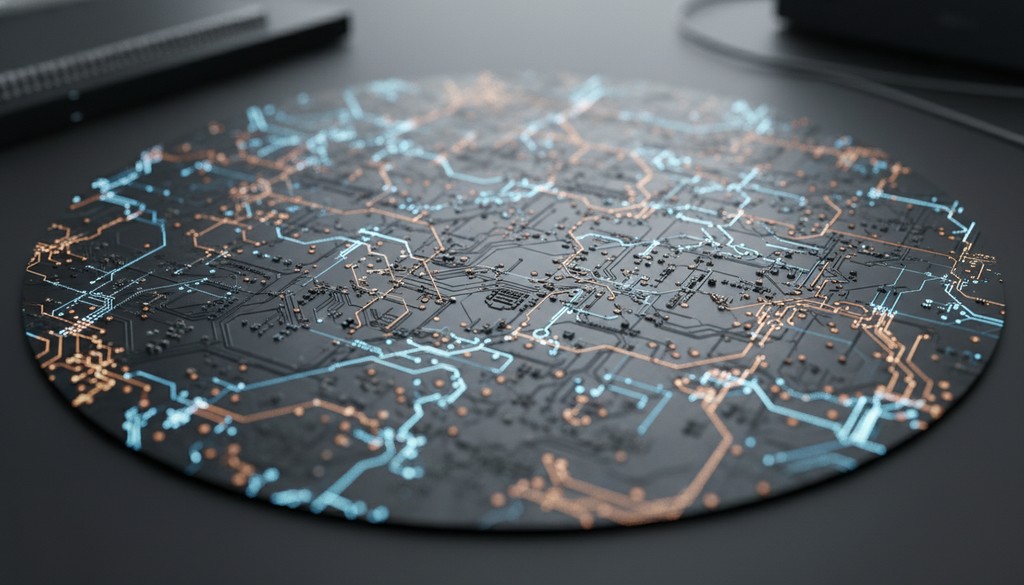
In 2026, we are finally seeing the end of the 'one-size-fits-all' AI chip delusion. The market has matured into two distinct, grumpy camps: the massive data center behemoths and the nimble edge accelerators. According to ↗finance.yahoo.com, the hardware AI market is hitting $12.39 billion this year, driven by a desperate need for energy efficiency and low-latency processing. We’ve moved past the 2025 era of side-by-side rankings; now, developers are choosing hardware based on whether they need to power a city-sized server farm or a doorbell that doesn't melt its own casing.
The Titans and the Also-Rans
NVIDIA continues its tradition of naming chips after people much smarter than the marketing teams selling them. Their 'Rubin' architecture, slated for late 2026, claims a staggering 3.6 EFLOPS of compute—roughly 3.3 times more powerful than the current Blackwell chips, as noted by ↗bigdatasupply.com. Meanwhile, Microsoft’s 'Braga' chip has been delayed to 2026 and is already expected to fall short of NVIDIA’s flagship. It’s a classic tech tragedy: by the time you build your 'NVIDIA killer,' NVIDIA has already moved the goalposts to a different stadium.
Intelligence at the Edge (Without the Cloud Bill)
The real progress isn't just in making bigger heaters for data centers. As ↗promwad.com points out, 2026 is the year of the 'predictable power profile.' We are seeing a clear separation between:
- Edge SoCs: The heavy lifters for complex local tasks.
- Dedicated NPUs: Neural Processing Units that do one thing (inference) without wasting battery.
- MCU-class Accelerators: For when your toaster needs just enough 'brain' to recognize bread but not enough to start a revolution.
Ultimately, the goal for 2026 isn't just 'more AI'—it's about hardware that adapts its behavior based on context to save power. We're finally moving toward a world where 'smart' devices don't require a direct umbilical cord to a gigawatt-hungry data center just to perform basic speech-to-text.